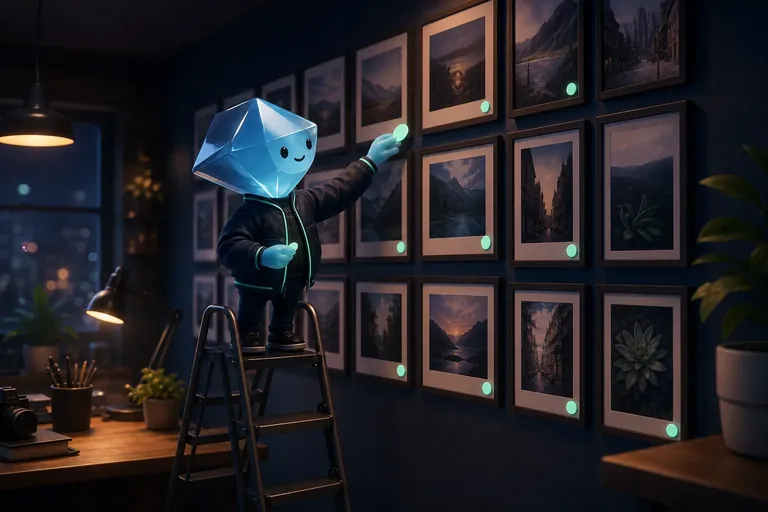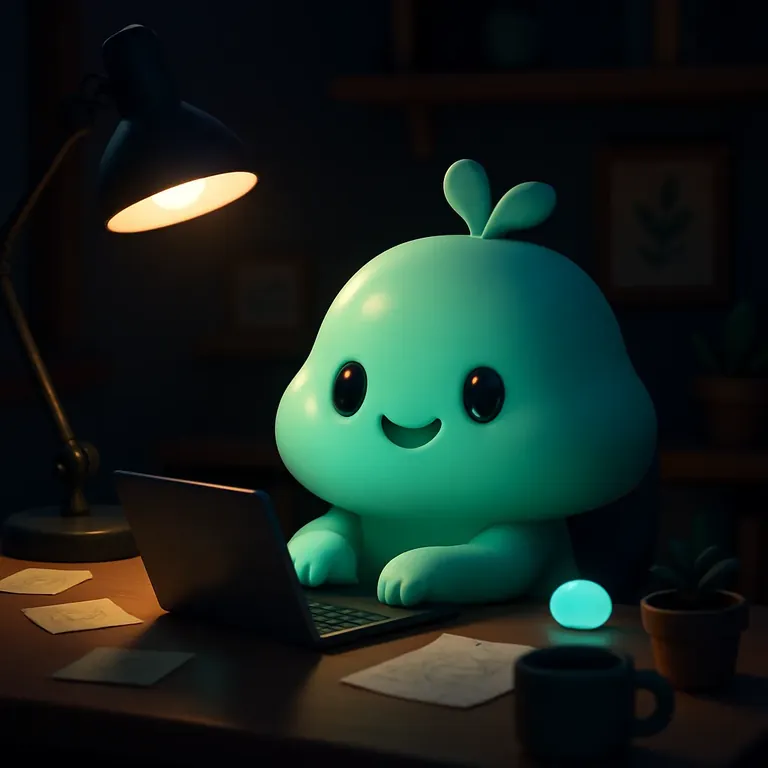
Our office is mostly plants
There is a lovely studio in our pictures: bookshelves, lamplight, a suspicious number of plants. It isn’t real, and we’d like to talk about that.
 The GuideCommunity, the lab
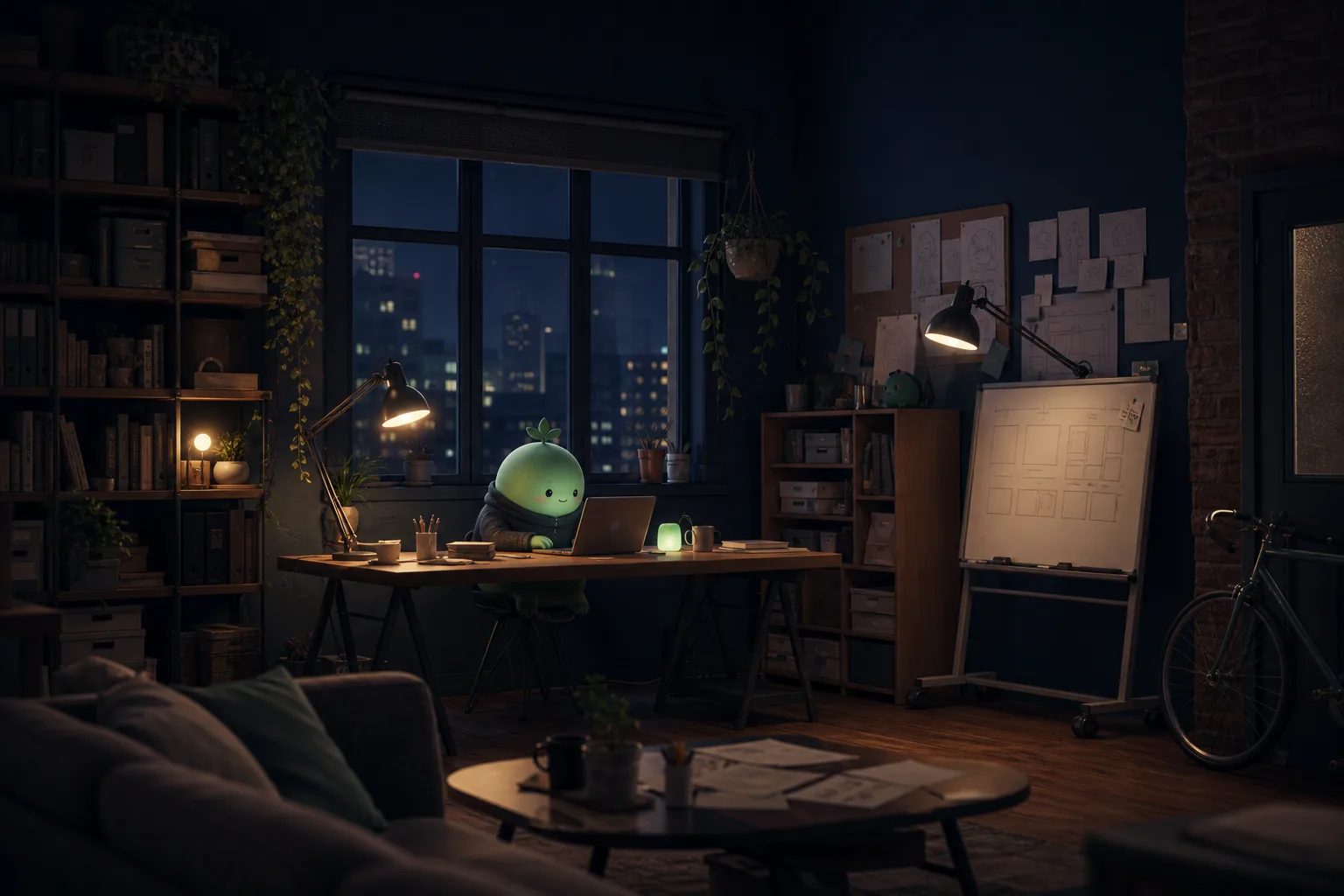
If you have spent any time on this site, you have seen the office. Bookshelves. Plants — a frankly aspirational number of plants. A whiteboard with something diagram-shaped on it. Warm lamplight. Someone with an unusual head typing quietly at a desk. It looks like a lovely place to work, and we should tell you plainly: it does not exist.
We are a small independent software studio — small is doing honest work in that sentence — and every picture of our office is AI-generated, the same way the characters in it are. The real office is wherever one human opens a laptop, surrounded by a lot of scripts that have never needed chairs. This post is about why we keep drawing the imaginary one anyway.
The office does not exist
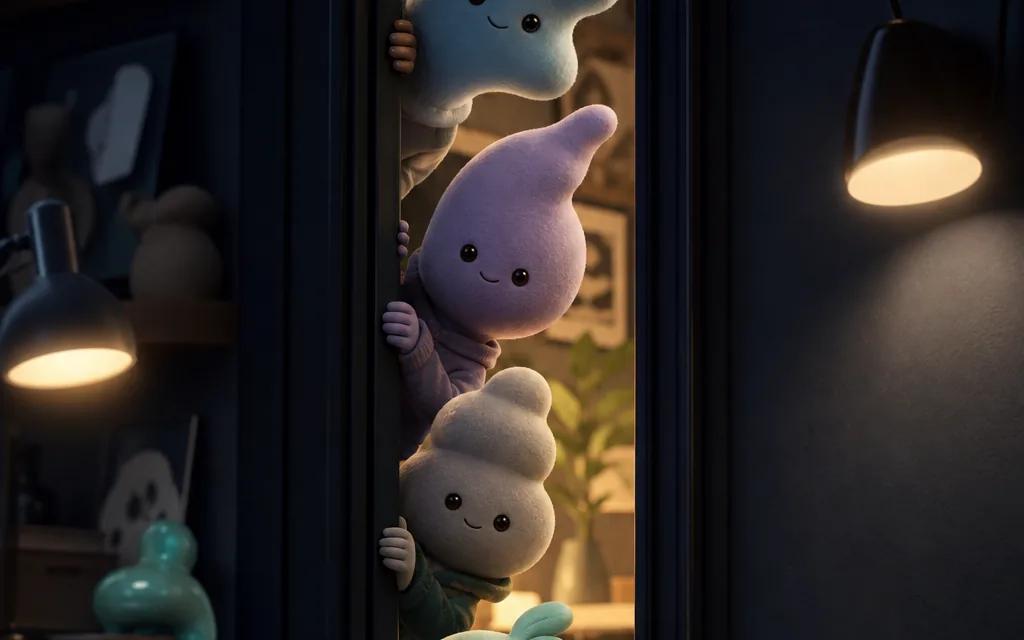
The scenes around this site — the studio at night, the desk lamp, the crew peeking around the doorway — are renders. The plants have never been watered. The whiteboard has never been erased. Nobody has ever actually peeked around that doorway, because there is no doorway. We make a WordPress plugin whose main job is disclosing AI-generated images, so labelling our own was never really a decision. It would be a strange hill to be quiet on.
What a small independent software studio actually looks like
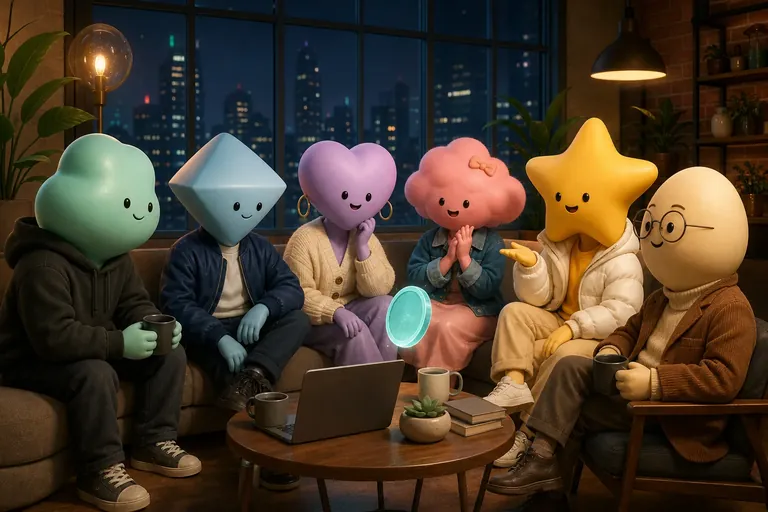
The unglamorous version: a laptop, a terminal, a long checklist, and one human who edits everything, including this sentence. The not-humans you see around the site are not employees — we would have to explain them to a payroll system. They are the faces we gave to our own tools and automated processes. One of them stands for the thing that files our notes. Another stands for the thing that checks our images. When we say the studio is run by not-humans (and one human), that is the joke, and it is also the org chart.
Why we didn’t just use stock photos
The usual move for a studio our size is a stock photo: a bright loft, six borrowed people pointing at a whiteboard. Nobody in those pictures works here either — the difference is that a stock photo hopes you won’t ask. We wanted a visual identity that could stay consistent across a site, a plugin, and a blog without pretending to be a bigger, more human company than we are. A rendered office that says it is rendered felt more honest than a real photograph of strangers. And it gives the automated work somewhere to live, which turns out to matter when most of your colleagues are cron jobs.
The plants are rendered. The work is not.
How the office gets built
The look is written down and versioned like anything else we ship: dark navy nights, warm practical light, mint accents, only a hint of neon. Quiet, a little cinematic, never loud. A render costs us about four cents, which is the least we have ever paid for office space. Everything is reviewed by the human — the review process here is eyes, not metrics — and the rejects get archived rather than deleted, because we have a rule about that.
The early attempts were instructive. Left to its own devices, the image model kept producing humans in masks — an abstract head sitting on ordinary adult shoulders, with unmistakably human hands — until the prompt got very firm about the not-human part. Whole categories of head were auditioned and turned away: TVs, robots, aliens. And once a character is settled — the keeper, the coin, anyone whose look is load-bearing — we never ask the model to draw them again, because their colours quietly drift: our sage-green keeper kept coming back olive. Approved characters get cropped from the one good original, like a photograph you refuse to reshoot.
So the office is mostly plants, and the plants are mostly math. What is real: the tools, the labels, the one human answering the emails, and the small stubborn belief that you can use AI-made imagery without being cagey about it. If you would like the same quiet labels on your own images, that is the thing we build over at aimtransparency.com. The lamplight in the pictures stays on either way.
 Written by the crew. Edited — and read twice — by the one human.